
Using OpenScienceEd (OER) With ADI as a Jumping-Off Point: Real Examples from Our Middle School Books
 Krista Sampson3 min read

Many teachers using open educational resources (OER) like OpenSciEd hit common pain-points:
- The units feel too long or bundled into one driving question that spans months, leaving students disengaged.
- The storyline is rich but hard to teach—teachers ask, Where do I start?
- They want manageable entry points that still allow students to explore, argue, and make sense of phenomena.
That’s exactly where ADI comes in. ADI gives you a structured investigation that can plug into your OER unit—keeping rigor and phenomena sense-making, but shortening the cycle and giving students a clear task, data, argumentation, and closure. And yes—we have full books of investigations for middle school, and each book comes with access to our Learning Hub app.
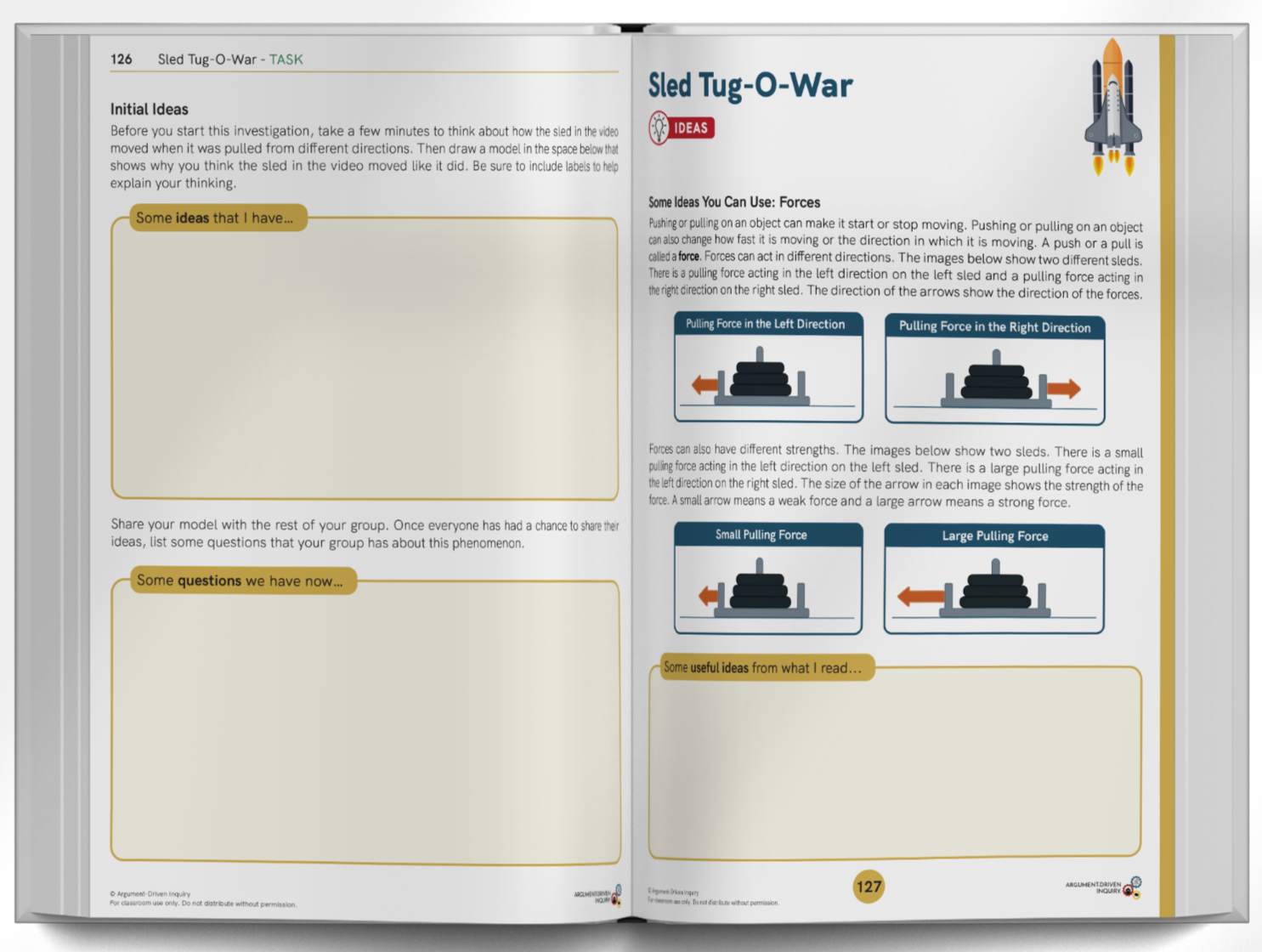
Why ADI Helps Teachers Using OER
- Jumping-off point: Instead of being stuck in one long storyline, you get a ready-made investigation with a question, handouts, data, scaffolding.
- Shorter cycles: Rather than dragging a phenomenon for months, you can embed an ADI investigation that takes about 5 days, then return to the larger OER storyline with renewed student energy.
- Built supports: Our middle school books include teacher guidance, student sheets, argumentation scaffolds—and via the Learning Hub, you get slides, downloads, tips.
- Alignment and flexibility: You don’t abandon the OER storyline—you enhance it by adding an ADI investigation at a natural point of student readiness.
Real Examples from Our Middle-School Books
Here are three actual titles and how you might use them in an OER unit:
6th Grade
- OER Storyline: Populations & Resources – ecosystem stability and limiting factors. ADI Book (NGSS Edition): Life Science. Investigation Title: What Happens to Populations When a Resource Becomes Limited? Page #: 61–84. NGSS PE Alignment: MS-LS2-1, MS-LS2-4
- OER Storyline: Earth’s Changing Climate – energy flow and solar patterns. ADI Book (NGSS Edition): Earth & Space Science. Investigation Title: Why Do Some Places on Earth Get More Sunlight Than Others? Page #: 63–88. NGSS PE Alignment: MS-ESS2-6, MS-ESS3-3
7th Grade
- OER Storyline: Traits & Reproduction – heredity and variation. ADI Book (NGSS Edition): Life Science. Investigation Title: Why Do Offspring Sometimes Look Different From Their Parents? Page #: 31–54. NGSS PE Alignment: MS-LS3-1, MS-LS3-2
- OER Storyline: Matter & Energy in Ecosystems – photosynthesis and food webs. ADI Book (NGSS Edition): Life Science. Investigation Title: How Do Organisms Get the Matter and Energy They Need to Grow? Page #: 85–108. NGSS PE Alignment: MS-LS1-6, MS-LS2-3
8th Grade
- OER Storyline: Chemical Reactions – formation of new substances. ADI Book (NGSS Edition): Physical Science. Investigation Title: How Can You Tell If a Chemical Reaction Has Occurred? Page #: 59–84. NGSS PE Alignment: MS-PS1-2, MS-PS1-5
- OER Storyline: Force & Motion – Newton’s laws and mass relationships. ADI Book (NGSS Edition): Physical Science. Investigation Title: How Does the Mass of an Object Affect Its Motion? Page #: 85–108. NGSS PE Alignment: MS-PS2-1, MS-PS2-2
Cross-Grade
- OER Focus: Earth Systems & Human Impact – climate feedbacks and solutions. ADI Book (NGSS Edition): Earth & Space Science. Investigation Title: How Do Human Activities Affect Earth’s Systems? Page #: 89–112. NGSS PE Alignment: MS-ESS3-3, MS-ESS3-4
All of these books can be found here and if you want even more ADI investigations, those can be found in our app, the ADI Learning Hub.
How to Integrate It with Your OER Program
- Identify one major unit in your OER guide (for example: ecosystems, traits & reproduction, chemical reactions).
- Choose an ADI investigation from the book catalog that aligns to that unit’s performance expectations.
-
Insert the ADI investigation at a strategic point – either
- Right after students have explored the phenomenon in OER, as a deeper‐dive, or
- Mid-way through the unit to maintain student momentum and refocus inquiry.
- Use it as a benchmark. Because ADI investigations require students to design, test, and argue using evidence, they serve as ideal benchmark assessments for three-dimensional learning — demonstrating mastery of both content (DCIs) and science and engineering practices (SEPs).
- Use the supports in the book + the Learning Hub (teacher notes, slides, student handouts) to manage logistics.
- Debrief with students and connect their argument back to the OER storyline driving question—so you loop back into the sense-making path rather than detaching from it.
- Reflect with your class: “How did our investigation help answer the bigger question of our storyline?” This helps maintain coherence even though you shortened the investigation cycle.
Final Thoughts
Using OER doesn’t mean you have to move slowly or get locked into long storylines that drag. With ADI investigations you get a clear entry point, a manageable cycle, and meaningful student engagement while staying aligned to your standards and sense-making goals.
Teachers often tell us: “This is the first time students are arguing from data rather than just answering the question.” That’s exactly the shift we aim for. And you don’t have to wait—your next investigation could start next week.

Krista Sampson is a former elementary teacher who started ADI as a company in 2010 and launched Nutty Brown Press in 2024.


