
Research
Built on two decades of classroom research
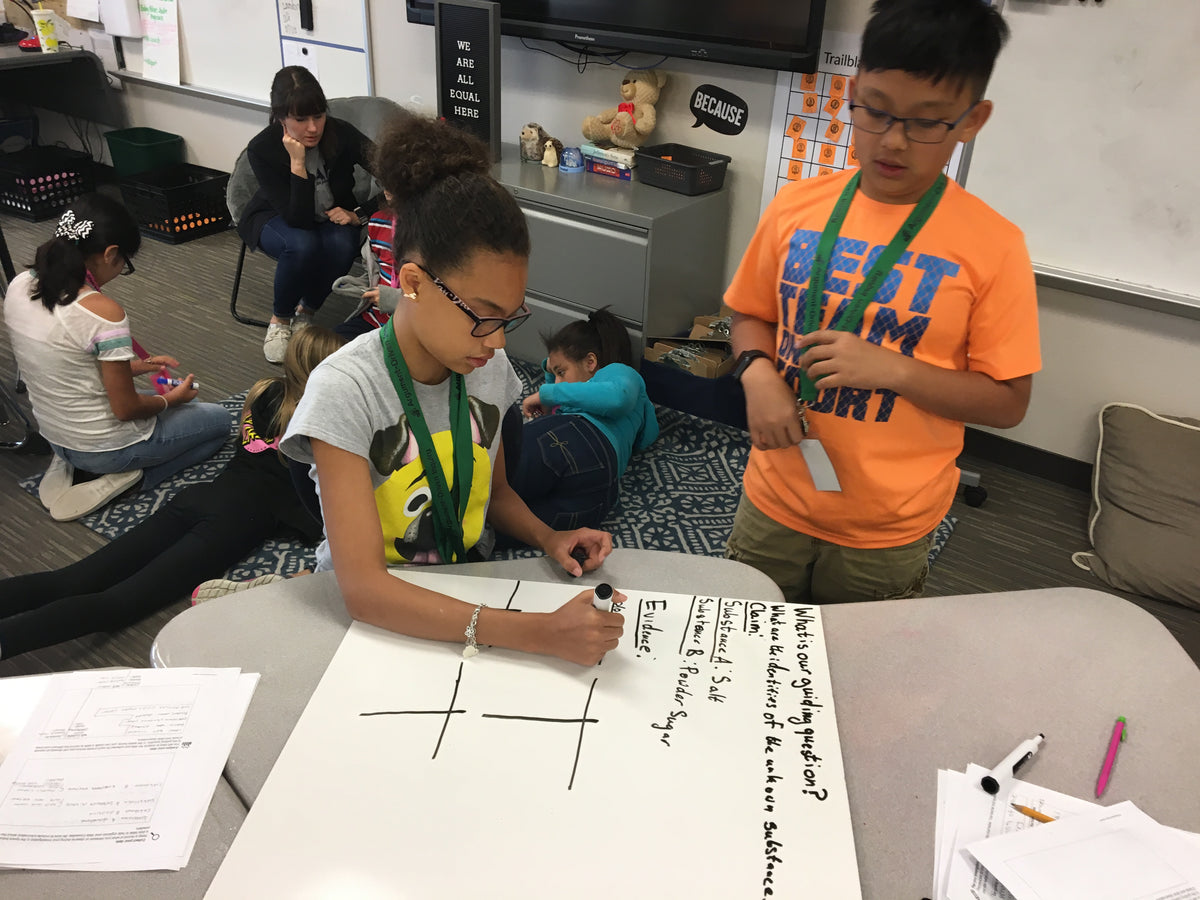
Argument-Driven Inquiry® was created by Dr. Victor Sampson to help students learn to think and work like scientists, not just memorize facts. It was developed and tested with a federal Institute of Education Sciences grant at Florida State University, extended to math and engineering at the University of Texas at Austin, and studied in more than 50 peer-reviewed publications.
50+peer-reviewed studies on the ADI model
2008first federal IES research grant
1,500+certified ADI facilitators
How the research developed
From one classroom to classrooms nationwide
ADI has grown through ongoing studies with teachers and students at every level.
- 1 A classroom ideaVictor Sampson develops the approach as a high school science teacher in Phoenix.
- 2 Federally funded researchAn Institute of Education Sciences grant funds formal development and testing at Florida State University.
- 3 Math and engineeringResearch at the University of Texas at Austin, with Round Rock ISD teachers, extends ADI to math and engineering.
- 4 Ongoing studyMore than 50 peer-reviewed studies now examine ADI’s effect on learning, argumentation, and writing.
Key findings
What the research shows
Studies of ADI classrooms point to three consistent results.
Thinking
Stronger critical thinking and understanding
Students learn to analyze evidence, draw conclusions, and build scientifically accurate explanations that reflect a deep understanding of content.
Communication
Better argumentation and writing
Students get better at building, critiquing, and defending scientific arguments, and they write stronger reports and explain their reasoning more clearly.
Achievement
Higher science achievement
Students in ADI classrooms show stronger science achievement and process skills than peers in traditional instruction, with especially strong results in chemistry, biology, and physical science.
Across grade levels
Results from elementary through college
Elementary
Gains in critical thinking and engagement
Middle school
Stronger argumentation and science practices
High school
Large effects on science achievement and deeper learning
College
Gains in scientific reasoning, process skills, and writing
In the classroom
What teachers see
Schools and districts across the country use ADI to raise achievement and engagement.
Ruthie Hayes, Science Teacher, Northwest ISD
“I have been teaching a long time and I have never seen my students this engaged or thinking so much!”
Angelina Bailey, Science Teacher, Northwest ISD
“My students want to figure out the why! These investigations lead to better student understanding and achievement.”
David Hopper, Science Teacher, Cherokee County SD
“This is what we mean when we say science is a verb! My students learn so much from creating and revising their claims, evidence, and justifications.”
Laynee Yarbrough, Elementary Teacher, Ferris ISD
“This is the right way to integrate subjects. ADI connects science with math and ELA, and the connections make sense.”
Michelle Bromm, Science Teacher, Frisco ISD
“This was by far the best training I have done in all of my teaching career. I now know how to better support all my students as they learn how to do science.”
Sue Brenner, Elementary Teacher, Pasco County Schools
“Even with 15 to 20 minutes a day, you can do so much science if you use ADI!”
Teachers quoted on this page work in districts like
Frisco ISDPasco County SchoolsCherokee County SDNorthwest ISDFerris ISDDeKalb CUSD 428
See the research in your own classrooms
Ask for research summaries for your review committee, or pilot ADI in a few classrooms first.